

Robotimize Hosts Universiti Malaya Biomedical Engineering Students for Rehabilitation Technology Demonstration
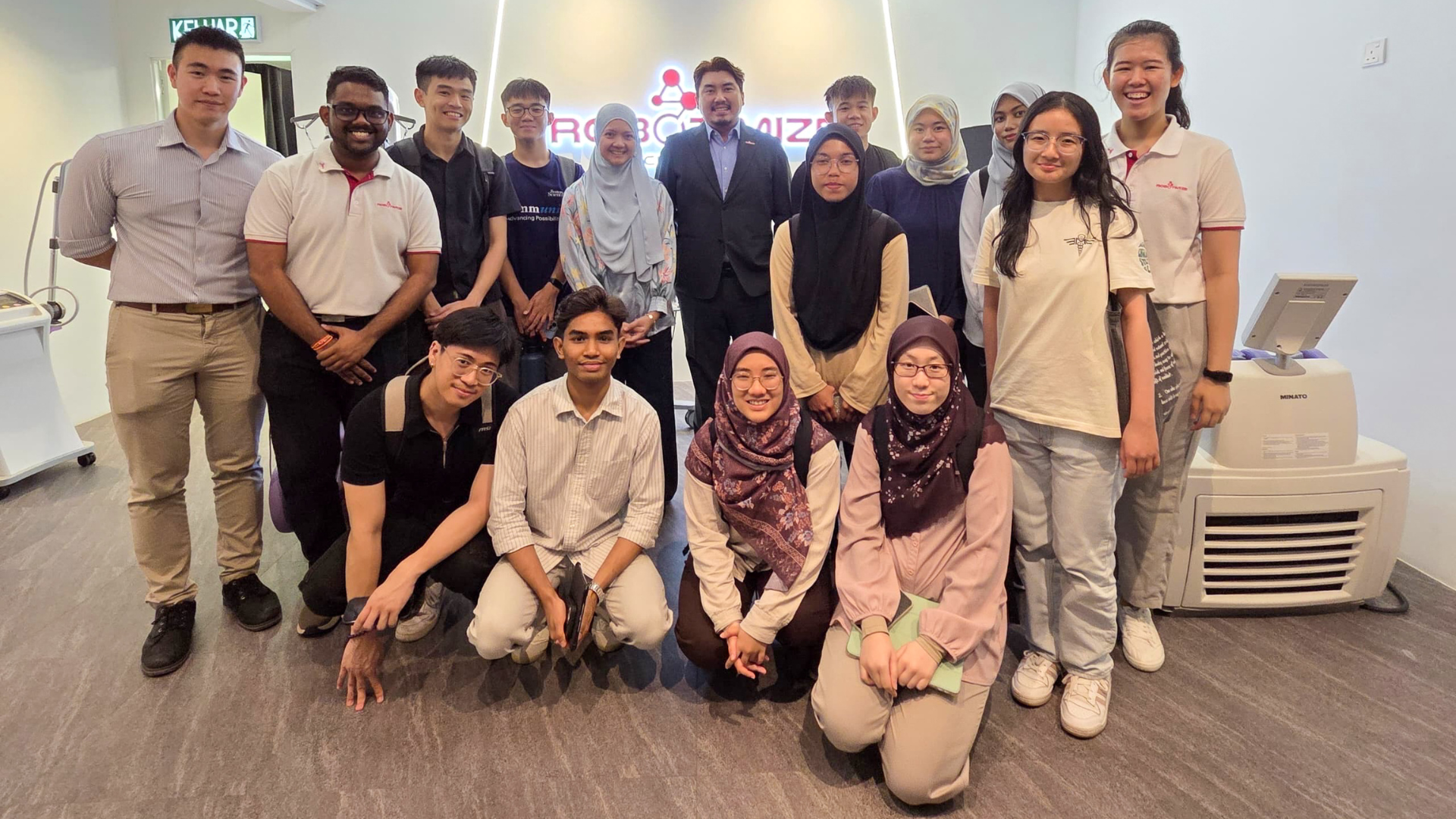
Group photo of Associate Professor Ir. Dr. Nur Azah Binti Hamzaid and Universiti Malaya Biomedical Engineering students with Even Koh, Group General Manager, Robotimize Group.
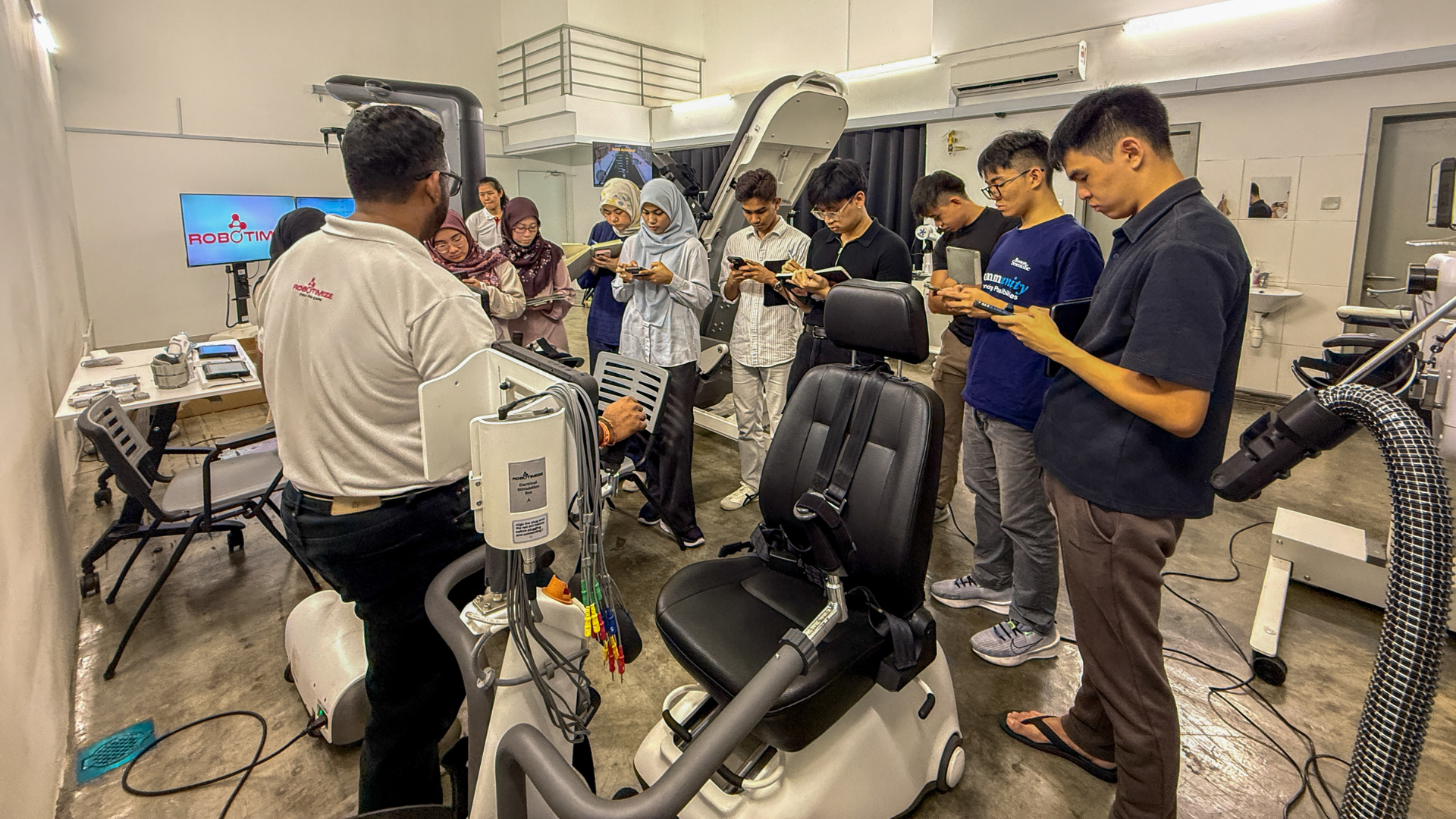
Arviind, Product Specialist, introduces the RevitaVivante™ ProMax FES Cycling device during the Universiti Malaya educational visit.
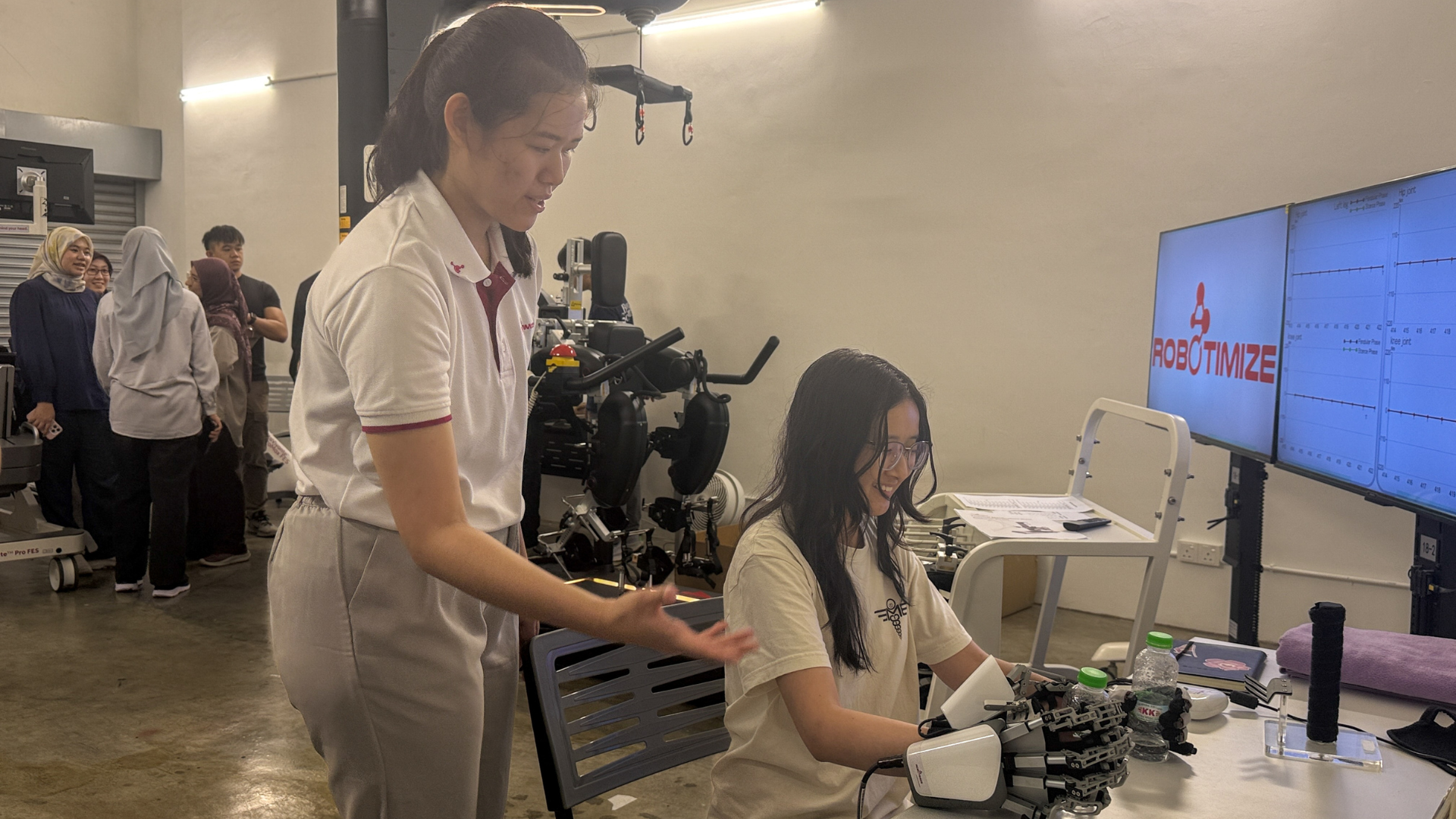
Audrey, Product Specialist, leads a hands-on HandVivante™ MirrorHand session with a student.
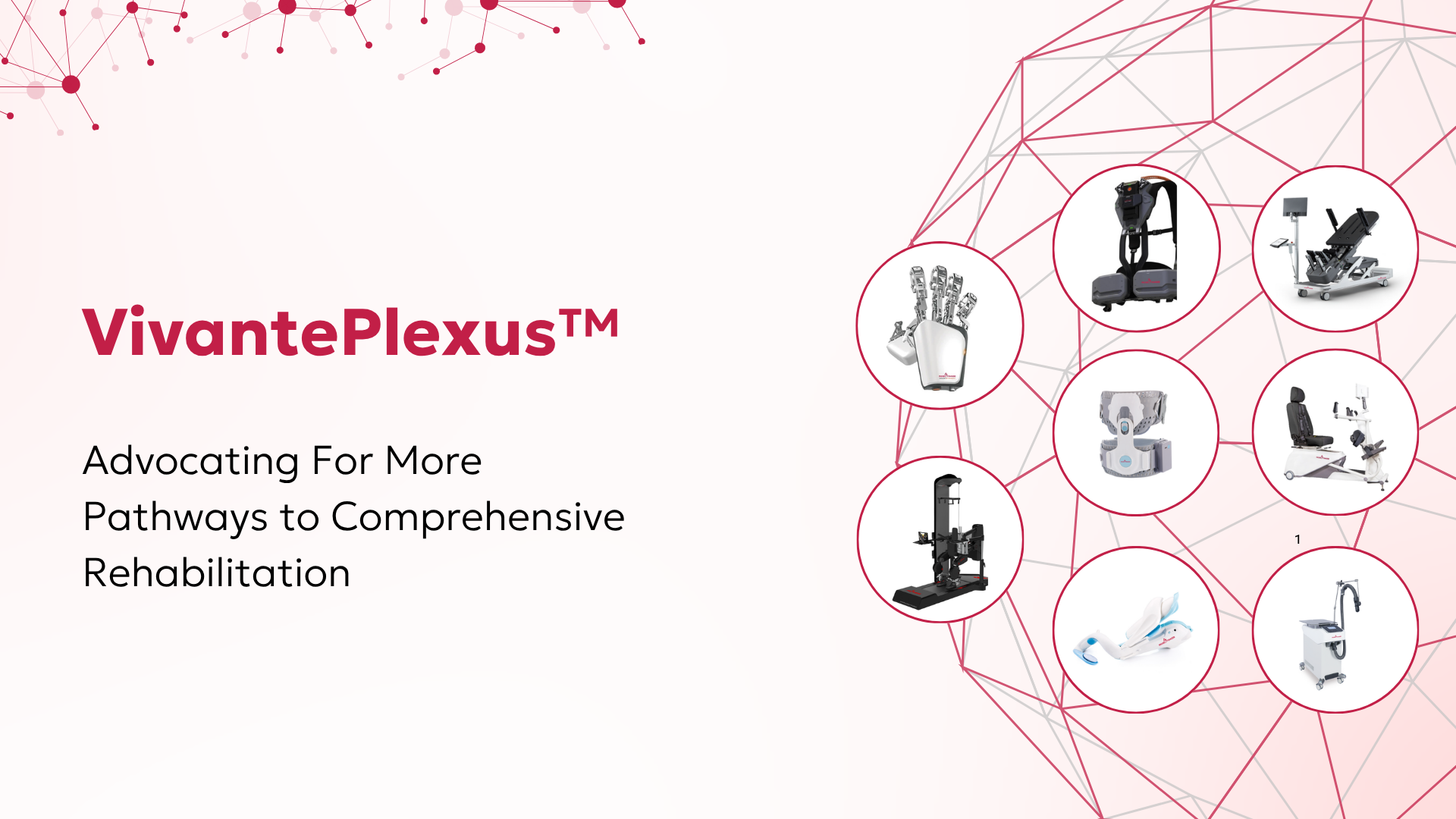
VivantePlexus™ ecosystem graphic illustrating Robotimize Group’s modular rehabilitation technology framework across upper-limb, lower-limb and neurological rehabilitation applications
Robotimize: Tech For Care. Advancing intelligent neurorehabilitation robotics and digital neurotechnologies across global rehabilitation markets.
Robotimize hosted Universiti Malaya biomedical engineering students for a hands-on session on rehabilitation robotics, FES and AI-enabled care.
The session introduced students to a range of technology-assisted rehabilitation concepts, including rehabilitation robotics, artificial intelligence-enabled systems, functional electrical stimulation (FES), and upper-limb rehabilitation technologies. The visit was designed as an academic-industry knowledge exchange, giving biomedical engineering students the opportunity to observe how engineering design, clinical workflow considerations, user experience, and rehabilitation science intersect in real-world technology development.
“The next generation of rehabilitation technology will be built by people who understand both the engineering and the patient,” said Kerry Guo, Founder and CEO, Robotimize Group. “Sessions like this create an important bridge between classroom learning and applied rehabilitation technology. We are grateful to Associate Professor Ir. Dr. Nur Azah and the Universiti Malaya students for their curiosity, thoughtful questions, and engagement throughout the visit.”
During the session, participants were introduced to selected technologies within Robotimize’s VivantePlexus™ ecosystem, an integrated rehabilitation technology framework designed to support clinician-led rehabilitation programmes across different care environments. The demonstrations included technologies related to FES cycling, upper-limb rehabilitation, and broader rehabilitation robotics applications.
Rather than presenting rehabilitation technologies as isolated devices, the session focused on how different systems may be considered within a wider rehabilitation pathway. This included discussion on how technology can be designed to complement professional clinical judgement, support structured functional training, and contribute to more continuous rehabilitation planning when used appropriately within institutional protocols and local regulatory requirements.
For students in biomedical engineering, the visit provided an opportunity to examine the practical realities behind rehabilitation technology development. These include device usability, patient safety considerations, therapist workflow, implementation constraints, evidence generation, training requirements, and the importance of designing technologies that are both technically robust and clinically meaningful.
“Rehabilitation technology must be understood as part of a wider care pathway, not simply as a collection of devices,” said Prof. Denny Oetomo, Co-Founder and CTO, Robotimize Group. “For engineers entering this field, it is important to appreciate how mechanical design, control systems, human-device interaction, and clinical context all come together. Academic-industry engagement helps cultivate this broader systems perspective.”
The visit also reflected Robotimize’s broader commitment to strengthening collaboration between academic institutions, clinical educators, healthcare professionals, and technology developers. As rehabilitation needs continue to grow across ageing populations and neurological care pathways, the development of safe, practical, and evidence-informed rehabilitation technologies will require close dialogue between research, engineering, clinical practice, and implementation teams.
“Evidence-informed innovation depends on sustained conversation between academia and industry,” said Zen Koh, Strategic Advisor, Robotimize Group. “When students engage directly with rehabilitation technologies, they are not merely learning about products. They are developing the analytical framework needed to evaluate, improve, and eventually build the next generation of rehabilitation solutions.”
Robotimize Group extends its appreciation to Associate Professor Ir. Dr. Nur Azah Binti Hamzaid and the students from the Department of Biomedical Engineering, Faculty of Engineering, Universiti Malaya, for their participation, engagement, and intellectual curiosity throughout the session.
The company welcomes continued dialogue with universities, research institutions, clinical educators, and rehabilitation stakeholders interested in academic-industry collaboration, professional education, and responsible technology adoption in rehabilitation.
This educational visit was intended to support academic-industry knowledge exchange. Product demonstrations were conducted for educational and professional discussion purposes only. Product availability, intended use, and clinical application may vary by market and remain subject to applicable regulatory requirements, professional judgement, and institutional protocols. Participation by Universiti Malaya representatives does not constitute endorsement of any specific product or clinical claim.
About Robotimize Group
Robotimize Group is a health technology company headquartered in Singapore, specialising in intelligent rehabilitation robotics and digital neurotechnologies. Through VivantePlexus™, its integrated rehabilitation technology ecosystem, and ACE™, its strategic partnerships portfolio, Robotimize develops and distributes technologies designed to support clinician-led rehabilitation, functional training, and technology-enabled care pathways across institutional and community settings. Product availability, indications, and use are subject to applicable regulatory approvals and local clinical requirements.
For more information, visit: http://www.robotimize.tech
Jerry HONG
Robotimize Group
+60 11-1224 1674
email us here
Legal Disclaimer:
EIN Presswire provides this news content "as is" without warranty of any kind. We do not accept any responsibility or liability for the accuracy, content, images, videos, licenses, completeness, legality, or reliability of the information contained in this article. If you have any complaints or copyright issues related to this article, kindly contact the author above.
